One Block for Educational Credentials (OBEC)


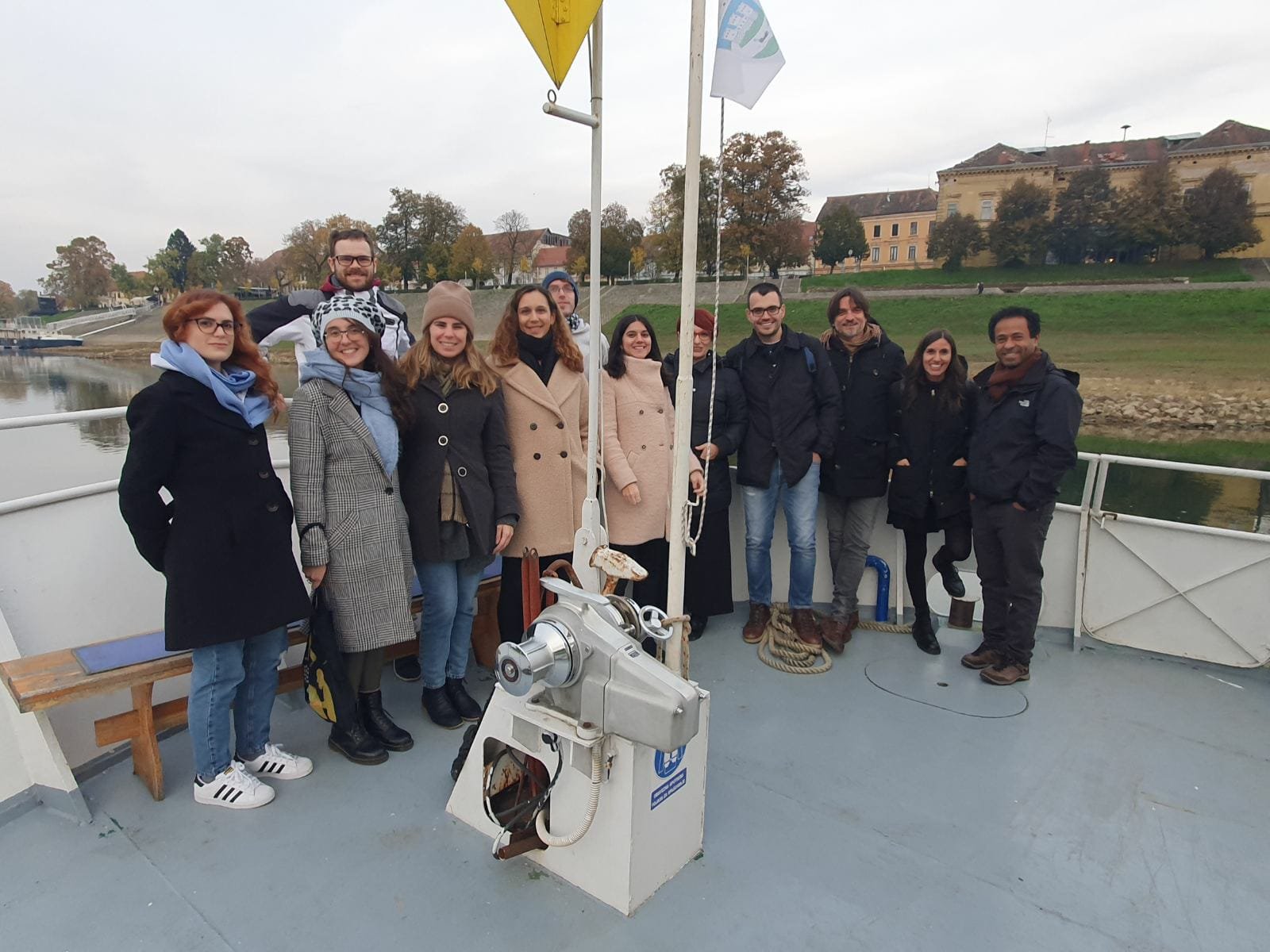
OBEC was a KA2 Strategic Partnership co-funded by the Erasmus + of the European Union. Led by SwIdeas in Sweden, the project also gathered partnerships from Croatia (Regional Develpment Agency of Sisak-Moslavina County - SIMORA), Italy (LAI-MOMO Società Cooperativa Sociale & Università degli studi di Urbino Carlo Bo), Belgium (EURADA - Association Europeenne Des Agences Developpement).
OBEC was an innovative project that aimed to explore the potentials of Blockchain technology to promote competency development and recognition of skills and qualifications by creating an innovative system to issue and validate learning credentials on a trial basis. Through this effort, the project’s goal was to encourage the professional and academic integration of migrants, exchange students, and individuals with informal and non-formal learning backgrounds. By contributing to the educational and economic integration of these targeted groups, OBEC further envisioned to benefit individuals with a migrant background, students, teachers, education institutions, and employers. Focusing on the key issue of a lack of uniformity and transparency in systems of validation of credentials, this effort also resulted in positive effects in the working context, promoting employability, empowerment, and accessibility to the labour market.
-
OBEC was an innovative KA2 project which started in October 2020 and lasted for 2 years, until the end of september 2022. Its focus was on the educational system, and on exploring the possibilities that blockchain technology may offer to the educational field in regard to certifications issuing and recognition.
-
Inspired by the fact that the current educational system places several obstacles for validation and verification of educational certificates, especially across countries and across different educational institutions. This in turn may hinder the ability of migrants, exchange students, and learners with informal backgrounds to have their skills and experience recognized. Consequently, they might have difficulties translating their learning into jobs that fulfill their aspirations and are adequate to their capabilities.
Blockchain technology might pose a solution for this issue. That is because education institutions and learners can use the technology as a transparent, trusted system for securing, sharing, and verifying academic achievements in Europe. It can therefore work as a new infrastructure to secure, share, and verify learning achievements.
-
Blockchain is a global, cross-industry and disruptive technology that is forecast to fuel the growth of the global economy for the next several decades.
It is a distributed ledger (From a technical perspective, a ledger is simply a list of sequential, time-stamped transactions) that provides a way for information to be recorded and shared by a community. In this community, each member maintains his or her own copy of the information and all members must validate any updates collectively. The information could represent transactions, contracts, assets, identities, or practically anything else that can be described in digital form.
Each update in this network is a new “block” added to the end of a “chain.”
Entries are permanent, transparent, and searchable, which makes it possible for community members to view transaction histories in their entirety.
A protocol manages how new edits or entries are initiated, validated, recorded, and distributed.
-
Decentralization
With blockchain technology, peer-to-peer consensus algorithms transparently record and verify transactions without a third party - potentially reducing or even eliminating cost, delays, and general complexity. Greater decentralization of the internet would place more control in the hands of the user—or more specifically, the user’s devices
Transparency
Blockchain technology provides an indisputable mechanism to verify that the data of a transaction has existed at a specific time. Moreover, because each block in the chain contains information about the previous block, the history, position and ownership of each block are automatically authenticated, and cannot be altered.
Immutability
The immutability of blockchains means that it is essentially impossible for changes to be made once established: this, in turn, increases confidence in the integrity of the data and reduces the opportunities for fraud. Immutability is interlinked with security, and its classic properties of confidentiality, integrity, and availability. Immutability is also about resilience and irreversibility.
Blockchain would thereby provide independence, ownership, control, verifiability, and permanence for the recipient and the issuer of education credentials.
Project goals

To address the obstacle imposed by differences among national educational systems
Which leads to:
Difficult and slow processes to recognize certifications and skills.
Delays in migrant's integration into the labor market;
Unfeasibility of migrants to practice their professions.

To introduce the revolutionary possibilities Blockchain Technology can initiate within the educational field
By promoting the integration and prosperity of all, inspiring important changes.

To positively impact social inclusion and employability
To explore innovative digital tools to foster the notions of inclusivity and diversity

To contribute to the start of a process in the European Union
Which can revolutionize the world through the creation of a barrier-free education system that can prosper through enriched diversity and increased transnational mobility.
Project progress
1. Naming the Barriers
Research of the current state of the education and working contexts, as well as the current status of knowledge regarding Blockchain technology.
Main implemented activity
Conduction of a research of knowledge gaps and the current state of economic and social integration of the target group
Main outcome
The findings of the research resulted in one national report per country which have been combined in one final comprehensive report, with summaries in Swedish, Italian, Croatian, and French.
The final report:
Informs about national-specific and the needs in the European context.
Includes legal and institutional barriers to implementing a standardized system of educational credentials, as well as the legal, institutional, and technological barriers, regulations, and incentives to encourage the use of blockchain technology in Europe.
Goal
The final report has the potential of being utilized by decision and policy makers in Europe to identify issues around different educational systems and within the European context which hinder the employability and professional integration of migrants, mobility students, and individuals with alternative learning backgrounds and, as a consequence, hinder their adequate social inclusion and economic prosperity.
Identifying these obstacles will be key to setting the ground for the creation of a unified system of educational credentials beyond the higher institutions.
Access our report here!
2. Inspiring Revolutionary Credentials
Development of an upskilling training program, which has its certifications issued on a blockchain platform as an innovative badge system.
Main implemented activities
Development of 13 upskilling training modules
Assessment and selection of a platform to issue credentials based on Blockchain technology
Testing of modules & blockchain-based platform in each partner country
Main outcome
Development of four chapters according to different topics with accompanying material for trainers to keep on using the developed material
Goal
To assess the possibilities of blockchain technology for the educational context in a simplified manner, and hopefully, inspire other initiatives in a wider context.
To promote its adoption as the main global standard (in terms of social adoption) for issuing records on the blockchain.
Access our material here!

Chapter 1: Circular Economy & Entrepreneurship.
Here you will find the training and guiding materials of the Modules:
Module 3 - How to start a business
Module 4 - Create your business Idea and plan
Module 8 - Soft skills for responsible entrepreneurial mindset
Module 9 - Working in a Circular Economy context - upskilling your business and your CV
Access our training material here:

Chapter 2: Tailoring
Here you will find the training and guiding materials of the Modules:
Module 6 - Leather good laboratory
Module 7 - Tailoring laboratory
Access our training material here:

Chapter 3: Gaming, Coding & Technology
Here you will find the training and guiding materials of the Modules:
Module 1: Gaming Development - Unity Program
Module 2: Gaming Development - Blender Program
Module 5: How to use Blockchain Technology to verify your credentials
Module 12: Coding in classroom
Module 13: Ethical and moral problems of artificial intelligence
Access our training material here:

Chapter 4: Logic & Critical Thinking
Here you will find the training and guiding materials of the Modules:
Module 10: Critical Thinking
Module 11: Logical fallacies, how to recognize them and how to avoid them
Access our training material here:
Check out our chapters in the partner languages
Swedish
Croatian
Italian
Dutch
French
3. Real-life applications
The consortium prepared a set of case studies, good practices and mentor’s advice for practitioners in the form of 6/7 multimedia material and a guiding material in text format. This constitutes the final and main expected contribution from the project to the future of the education context, as well as for encouraging crucial changes within the educational field.
Main implemented activities
Collection of multimedia material throughout the project’s duration and different activities
Edition of material in the form of videos which illustrate the experiences of the project in each partner country, as well as advices from experts
Collection of main lessons from project, two case studies per partner, and mentor’s advice. This has been compiled in one guiding material
Main outcome
6/7 multimedia material
One guiding material in text format
Goal
To contribute to the future of the education context and encourage crucial changes.
Access our Guiding Material here!

Guiding the Road to the Future
This document includes good practices and mentor’s advice for practitioners. It also compiles the main experiences and learnt lessons from the OBEC project to inspire and contribute to a more inclusive, transparent, and trusted educational context.
Want direct access to our case studies?
Have a look into the 21 OBEC case studies, 12 of which are in the educational sector.
Access our videos here!
Publications
Newsletters & Press-release (English)
Newsletters & Press-releases (Swedish)
Articles on EPALE - Electronic Platform for Adult Learning in Europe