
Participa City
Timeframe: 01.10.2024-30.09.2026
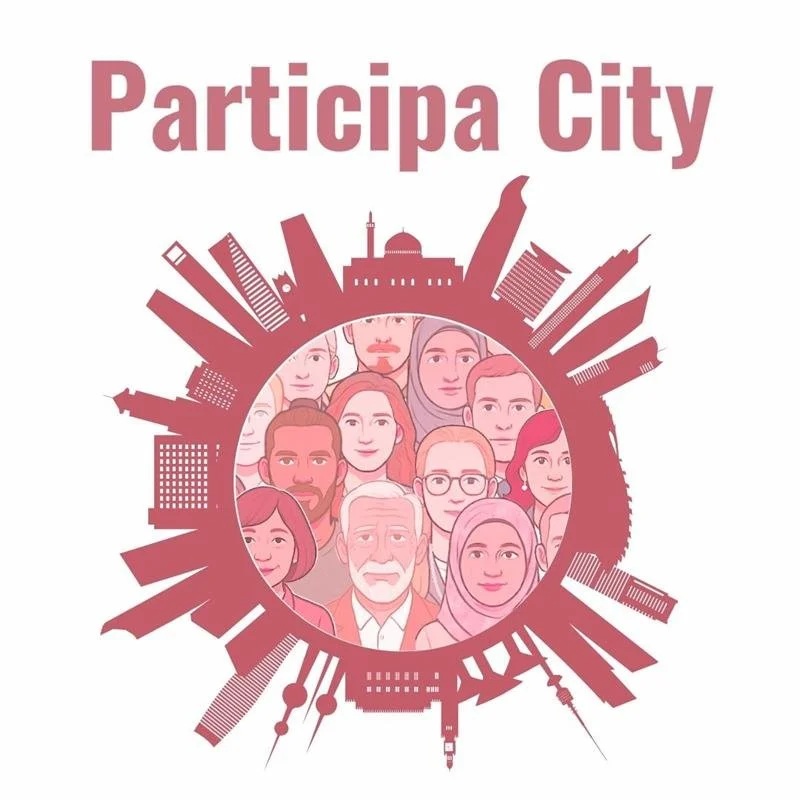
A Glimpse into the Project
Background
Participa City – Preventing racism and discrimination of ethnic and cultural minorities in Europe and fostering participation through a European game
Racism and discrimination of ethnic and cultural minorities can contribute to segregation of these groups and create barriers to active citizenship and participation in European society. The Participa City project aims to adapt a game which allows to train adult learners in key “gate keeper“ positions to detect and actively avoid racism and discrimination of ethnic and cultural minorities and to develop good practices to build inclusive processes.
Main Objectives
Objective 4
Strengthening participation of ethnic and cultural minorities in European society.
Objective 5
Fostering a diversity-friendly climate and inclusive society in Europe.
Objective 1
Preventing racism and discrimination of ethnic and cultural minorities in Europe.
Objective 2
Developing prevention strategies to reduce the negative consequences of discrimination.
Objective 3
Sensitising decision makers to avoid discriminatory structures and practices.
Planned Project Results
Report on transnational challenges in prevention of racism and discrimination of ethnic/cultural minorities in Europe
The European Participa City anti-discrimination game, including a trainer and a digital toolbox for customized learning
A network of trained adult education professionals who will disseminate the game to those shaping participation opportunities for ethnic/cultural minorities across Europe
Our Activities
With the collaboration of six experienced partners from five countries, we are:
Exploring the challenges in the prevention of racism and discrimination of ethnic and cultural minorities in Europe
Identifying competence gaps of adult education providers and key persons in the field of racism prevention
Educating AE trainers and gate keepers on how to avoid racism and discrimination
Providing the Participa City game in a European version as a gamified digital tool to contribute to the prevention of racism and discrimination
Project Results
Work Package 2 – Transnational context analysis
WP2 serves as the evidence base for the project’s later outputs, namely the European simulation game (WP3) and a two-step competence-oriented training course (WP4). The purpose of WP2 is to:
identify the ethnic and cultural groups most affected by racism and discrimination in each partner country.
analyse the “gatekeeper” fields where exclusion occurs most strongly.
collect, document and analyse “critical incidents,” authentic cases of discrimination that will inform action recommendations and serve as the basis for training materials.
An analysis was carried out across all five countries. The results highlight that, although national differences exist, there is strong convergence on both the groups most affected and the fields requiring action. Intersectional disadvantages - combining ethnicity with gender, disability or sexual orientation - are reported in all contexts.
The Transnational Analysis Report presents the main outcomes of WP2 and can be accessed here.

Project: 2024-1-DE02-KA220-ADU-000255284
Contact the project coordinators
Emily Hanna - emily.hanna@swideas.se
Lavinia Apicella - lavinia.apicella@swideas.se
Project Partners

Ifak e.V. - Project Coordinator

SwIdeas AB (SE)

blinc eG

Know and Can Ltd.
GRDR Migration – Citoyenneté – Développement

Storytellme